As I wade hip-deep through 180,000+ words I wrote nearly a year ago, trying to wrangle them into a book I feel excited to republish, I ask myself this question often. I’m far from a perfectionist, but man it’s hard to let something go and just declare it finished. I’ve probably been through the first chapters of The Broken Javelin fifty times each, and every time I find something to change.
Am I really making improvements? Or am I just reacting to my varying moods and sensibilities each day, my own inconsistency as a human? It’s hard to tell sometimes.
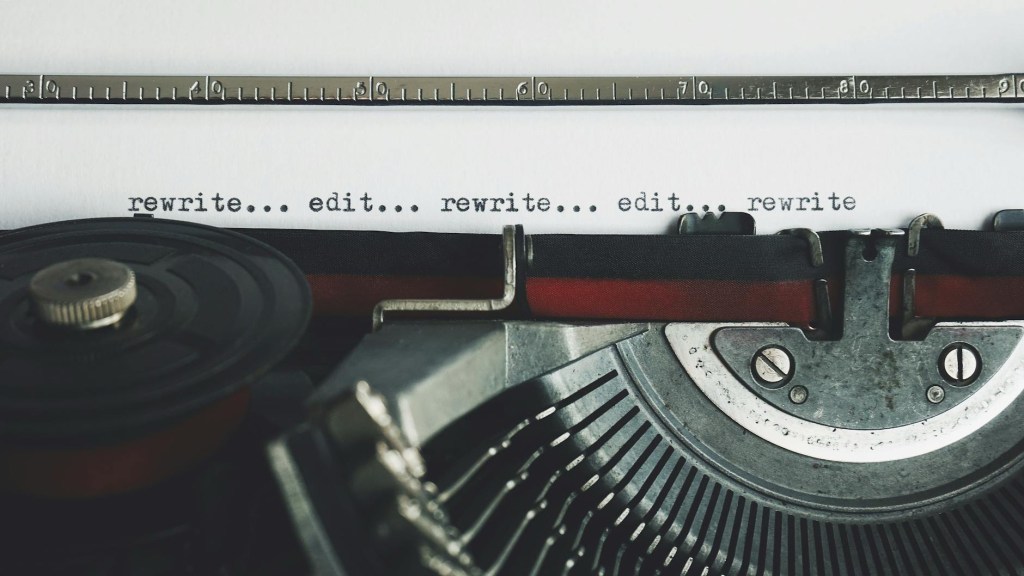
I won’t pretend to have the answers to how to avoid overediting, but I have had some comforting thoughts that make it just a little easier for me to let go and declare “this is good enough.”
The 80-20 Rule
This one is a classic that had held weight in more parts of my life than I can count – the interpretation varies, but in general the 80-20 rule states that you can get about 80% of the results from 20% of the causes. In editing, that means to me that out of the hundreds of changes I make, it’s likely that 80% of the improvements to my book will come from only 20% of the changes.
That gives me some comfort if I assume that those 20% of changes are the first 20% I make. And that stands to reason – the biggest most glaring edits are likely the ones a reader would have gotten hung up on first.
So my approach is to not worry about missing those last few changes, the ones I had to read my own book ten times to notice.
Engineering Mindset
Engineers excel at finding compromises. In a way, that’s all engineering really is; on one end of the spectrum you’ve got the big, elegant, beautiful engineered solution that would take ten years and a billion dollars, and on the other you’ve got a budget of ten dollars and a businessperson telling you there’s absolutely no time for fancy engineering stuff. Inevitably, the engineer’s job is to find something in the middle that works.
And most time, the definition of what “works” is also something that must be engineered, compromised, and optimized for the constraints involved.
So I like to picture myself as a book engineer – I could edit forever and spend a lifetime over optimizing, or I could make a compromise, make it work, and move on. A lot of the time that’s the only choice, and the majority of the time it’s going to work out just great.
Put Yourself In The Reader’s Shoes
How often have you read a book and had the entire experience shattered by a single weird sentence? Personally, that hasn’t happened to me, except maybe when I begrudgingly listened to the ACOTAR audiobook and heard the phrase “her mouth made a thin line” approximately 4,000 times. And even that wasn’t a single mistake that ruined the experience, it was a systematic one.
So if you’re stuck in an editing wormhole and fretting about the placement of a comma or the inflection of a single line of dialog, chances are you’re spending calories on something a reader will never notice, or at least a statistically significant portion of readers won’t ever notice. I’ll use this reasoning often to make myself move on or get un-stuck.
Happy editing!
Perrin
Discover more from Perrin D Hayes
Subscribe to get the latest posts sent to your email.

